

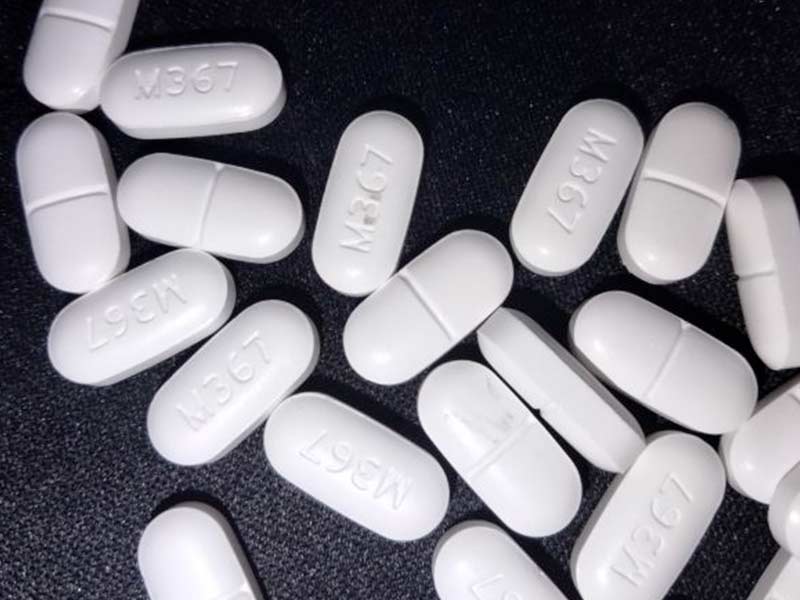
What is M367 White Oblong Pill?
Pill with imprint M367 is white, oblong, capsule-shaped and has been identified as a combination medication containing 10 mg of hydrocodone bitartrate (a narcotic opioid) and 325 mg of acetaminophen (commonly known as Tylenol). It is historically manufactured by Mallinckrodt Pharmaceuticals and is commonly prescribed for moderate to severe pain relief.
Acetaminophen/hydrocodone 325 mg/10 mg is classified as a Schedule II controlled substance under the Controlled Substances Act (CSA) due to its high potential for abuse and addiction.
- Norco 10/325
- Vicodin
- Lortab
- Hycet
- Norcos
- Hydro 10 mg
- Tabs
- Vikes

What Is the M367 White Oblong Pill Used For?
Doctors prescribe M367 white long pills for moderate to severe pain, especially for conditions where non-opioid pain relievers are not effective. It is commonly used for:
- Post-surgical pain relief
- Chronic pain (e.g., arthritis, lower back pain)
- Injury-related pain
- Cancer pain management
The hydrocodone in M367 white oval pills binds to opioid receptors in the brain and spinal cord, blocking pain signals while inducing relaxation and euphoria. The acetaminophen component is included to enhance pain relief, but it also presents a serious risk of liver damage when taken in excessive doses.
Acetaminophen is considered safe in controlled amounts, but the maximum recommended daily dose is 4,000 mg. Since each M367 white oblong pill contains 325 mg of acetaminophen, consuming more than 12 pills in a single day can result in acute liver failure (Mayo Clinic).
How M367 Pill Makes You Feel
When taken as prescribed, M367 pills make you feel:
- Pain relief (you stop noticing discomfort as much)
- A sense of relaxation and calmness
- Mild euphoria
- Drowsiness and sedation
But when taken in higher doses or misused, the effects become more intense. Some describe it as a floating sensation, a warm wave of relaxation, or feeling detached from stress and reality. Others say it’s like a weight lifting off their chest—a break from physical and emotional pain.
Misuse often happens in different ways:
- Taking extra pills when the effects wear off too soon
- Crushing and snorting M367 white pills to feel the high faster
- Mixing with alcohol or benzodiazepines to enhance sedation
This is where dependence begins—not necessarily because someone wants to get high, but because they start relying on M367 just to feel okay.

How Long Does M367 Take to Kick In and Wear Off?
The M367 white oval pill typically starts working within 30 to 60 minutes, with peak effects occurring around 1 to 2 hours after ingestion. The effects usually last between 4 to 6 hours.
For those who snort or inject the drug, the onset is almost immediate, but the high is shorter-lived, leading to more frequent use and a higher risk of overdose.
How Quickly Can You Get Addicted to M367?
According to the CDC, taking opioids for as little as 5 to 7 days can cause physical dependence, and cravings can start within two weeks (CDC Drug Overdose Rates).
The process is gradual:
- You start taking M367 as prescribed—relief is good.
- Your body adjusts—the same dose doesn’t work as well.
- You take a little extra—to get the same effect.
- You begin to need it—not just for pain, but to feel normal.
Many believe opioid addiction only happens to those who misuse drugs, but research shows even short-term use can lead to dependence. Once this happens, stopping M367 pills suddenly can cause intense withdrawal symptoms, making it harder to quit.
How to Get Off M367 Without Painful Withdrawal
Quitting M367 white pills cold turkey can cause severe withdrawal symptoms, including:
Once physical dependence is established, “cold turkey” cessation can trigger Autonomic Nervous System Distress, characterized by:
-
Bone-crushing body aches and tremors.
-
Severe respiratory and gastric distress.
-
Intense psychological crashes and suicidal ideation.
- Uncontrollable sweating
- Vomiting, diarrhea, and shaking
- Severe anxiety and depression
If you or someone you love is struggling, don’t wait until it’s too late. Call Still Detox in Boca Raton, Florida at 561-556-2677 to safely detox under medical supervision.

Counterfeit M367 Pills
2026 DEA alerts warn of Nitazenes (e.g., Protonitazene). These synthetic opioids can be 20 times more potent than fentanyl and often remain undetected by standard home test strips.
In 2016, the California Poison Control Center found counterfeit M367 pills laced with fentanyl, promethazine, and cocaine (CDC, 2016).
According to January 2026 DEA data, M367 counterfeit pills are now being produced with “pharmaceutical-grade” appearances that can deceive even experienced users.
The Emerging Nitazene Threat
While fentanyl remains a primary concern, 2025 clinical alerts highlight the rise of Nitazenes (synthetic opioids like Protonitazene) in counterfeit M367 pill supplies. Nitazenes can be 10 to 20 times more potent than fentanyl and are not detectable by standard over-the-counter fentanyl test strips.
Signs that an M367 white oblong pill is fake:
- It crumbles easily or looks powdery
- The imprint is faded or inconsistent
- It came from an unknown source (not a pharmacy)
If you suspect a pill is fake, DO NOT take it—it could be deadly within minutes.
The Real Dangers of M367: Beyond Physical Addiction
While many focus on the immediate risk of overdose, the long-term biological impact of M367 is far more reaching. Chronic use of this 10 mg hydrocodone/acetaminophen combination fundamentally re-wires how the body and brain function.
1. Neurotoxicity and Cognitive Decline
The most significant 2025 clinical update involves Opioid-Induced Neurotoxicity. Extended exposure to the M367 formulation doesn’t just block pain; it induces neuroinflammation and oxidative stress in the hippocampus—the brain’s primary memory center.
- Toxic Leukoencephalopathy: Updated FDA labeling in July 2025 now warns of degradation in the brain’s white matter. This damage to the communication pathways between brain regions can lead to permanent cognitive “fog,” significant memory loss, and motor coordination issues.
- Anhedonia: By overstimulating the reward circuit, M367 causes natural endorphin and dopamine systems to shut down. Users frequently report feeling “soulless” or unable to experience pleasure from daily life, a condition that may require years of neurological recovery.
2. Cardiovascular Risks: QT Prolongation
Research from the American Heart Association (2023–2025) highlights how the hydrocodone component in M367 white oblong pills interferes with the heart’s electrical signaling.
- Arrhythmias: M367 may induce “QT Interval Prolongation,” causing the heart to take longer than normal to recharge between beats.
- Cardiac Arrest: This electrical disruption significantly increases the risk of Torsades de Pointes, a fatal heart rhythm that can cause sudden collapse in individuals with no prior history of heart disease.
3. Digestive Shutdown and Bowel Obstruction
Opioids significantly slow the smooth muscles of the digestive tract. Chronic users of the M367 white oval pill often suffer from Opioid-Induced Constipation (OIC). Without clinical intervention, this can escalate to:
- Impaction: Waste becomes trapped in the colon, leading to systemic toxicity and severe abdominal pain.
- Bowel Perforation: In extreme cases of neglect, the intestinal wall can rupture, requiring emergency surgical stabilization.
4. Acute Liver Toxicity (The Acetaminophen Risk)
Each M367 pill contains 325 mg of acetaminophen. While safe in controlled doses, the cumulative effect in high-potency users is a primary clinical concern.
- The 4,000 mg Limit: Consuming more than 12 pills in 24 hours (or fewer if combined with alcohol) puts the user at immediate risk for Acute Liver Failure.
- Silent Damage: Hepatotoxicity often presents no early symptoms, manifesting only at critical stages through jaundice (yellowing of the eyes/skin), abdominal swelling, and extreme fatigue.
Data verified through January 2026 clinical reviews. Long-term use of Schedule II opioids requires strict medical supervision to prevent permanent physiological damage.
What Happens If You Stop M367 Pills Suddenly?
Stopping M367 white oval pills suddenly can trigger severe emotional crashes. Many people experience severe mood swings, irritability, and suicidal thoughts when quitting opioids too quickly. This is because the brain needs time to start producing dopamine again.